 Medicine · Observation · Prevention
MD / EN
Medicine · Observation · Prevention
02 / Philosophy
Treat the person, not simply the symptom.
Understand the body’smechanisms to carefor today andprevent tomorrow.
Mona’s practice is built on precise, whole-person observation. Diagnosis, listening and clinical reasoning guide an individualized strategy that considers the wider pattern rather than an isolated complaint.
道法自然“The Way follows what is naturally so.”
Laozi, Dao De Jing, chapter 25 ↗
03 / Mona Dinari
Practitioner.
Professor.
Herbalist.
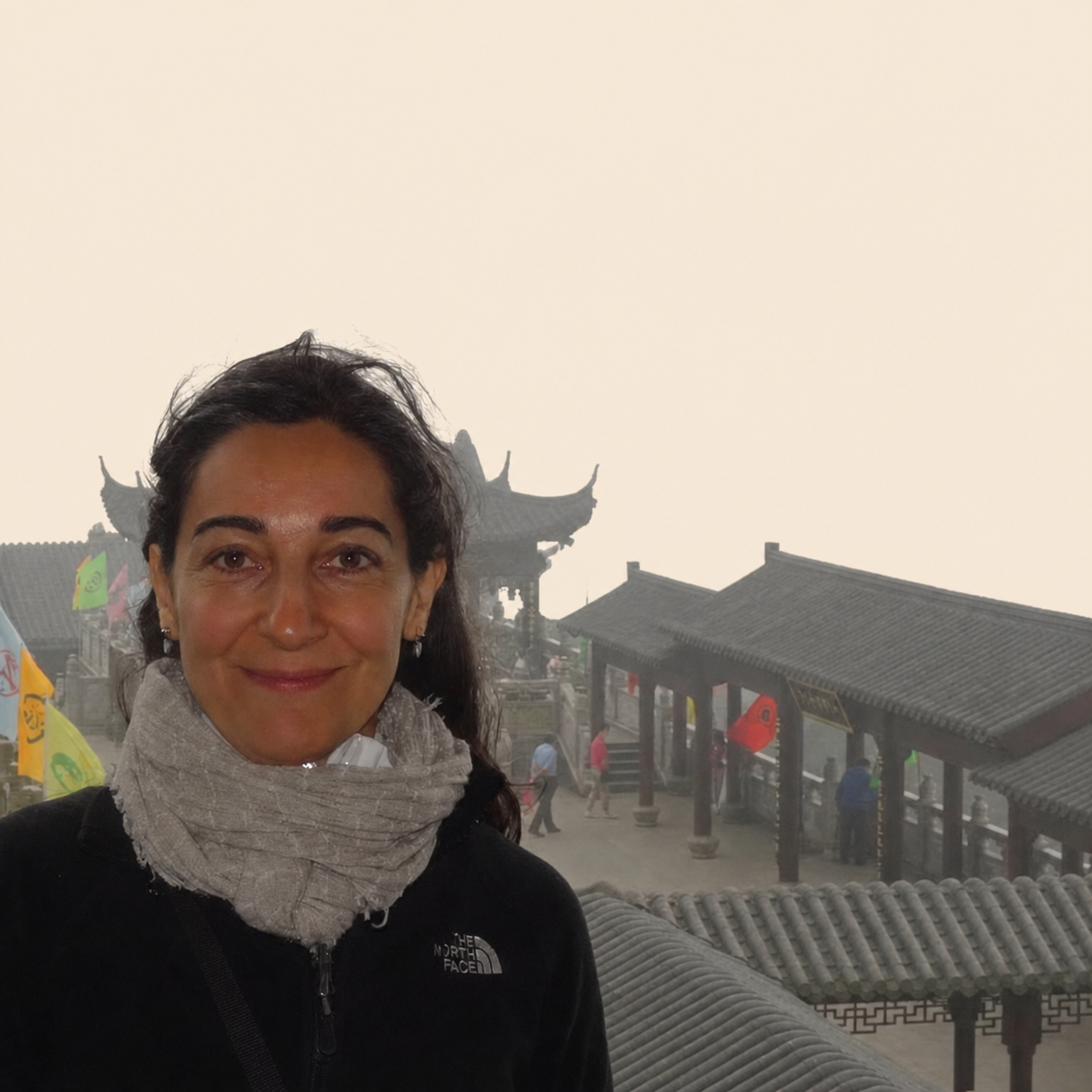
With more than twenty years of experience, Mona Dinari has developed a deep practice of classical Chinese medicine. She has pursued more than fifteen years of continuing education with Dr Jeffrey Yuen. Formally trained as an herbalist, she brings together acupuncture, herbal medicine, essential oils and energetic work.
Her studies span ophthalmology, gynecology, psychology and Taoist philosophy. As a professor of Chinese medicine, she teaches in Paris and the United States, sharing a rigorous, holistic approach centered on the body’s mechanisms, treatment and prevention.
Education
01Emperor's College of Traditional Oriental MedicineTraditional Oriental Medicine studies↗02University of Southern CaliforniaBS, Computer Science↗大醫精誠Mastery and sincerity of the great practitioner.A principle associated with Tang physician Sun Simiao.
Discover her approach
Herbal medicine
Study & practice
04 / Treatments
Every treatment begins with understanding the person as a whole.
Acupuncture
Individualized care guided by classical Chinese diagnostic principles.
Herbal medicine
Personalized botanical strategies informed by Mona’s formal herbalist training.
Essential oils
A measured integration when appropriate to the person and the wider care plan.
Energetic work
A complementary reading of the body’s dynamics within a rigorous, whole-person approach.
Care is individualized and does not replace appropriate medical diagnosis or emergency treatment.

A reading of detail.
An understanding of the whole.
05 / Ophthalmology
The eye
as a
gateway.
For Mona, ophthalmology offers an entry point into a global reading of the patient. The eye is not treated as an isolated organ, but understood within a wider physiological system and always alongside appropriate ophthalmological care.
Explore the approach06 / Qi · 氣
Qi, a languageof movement.
Qi, often written “chi” in English and French, is a foundational concept in Chinese thought and medicine. Classical texts use it to connect breath, matter, transformation and functional activity: it describes relationships and change rather than one isolated object.
In practice, this framework helps organize observations of rhythm, circulation, warmth, fatigue and response to care. Qi is not presented as an anatomical structure or a unit of energy measurable by contemporary biomedicine.
Understand qi and the meridians07 / The approach
Four steps, one aligned method.
- 01聞・切
Listen
Listen to the history, observe daily rhythms and take the pulse through the framework of Chinese medicine.
- 02辨
Understand
Identify the mechanisms that make the whole pattern coherent.
- 03治
Treat
Compose individualized care using the tools that fit the person.
- 04防
Prevent
Support balance over time and accompany meaningful change.

08 / Practitioner & professor
Study.
Practice.
Teach.
Alongside clinical practice, Mona teaches Chinese medicine in Paris and the United States, connecting classical theory, diagnostic reasoning and clinical application.
學而時習之,不亦說乎?“To study, then put learning into practice, is that not a joy?”
Confucius, Analects, I.1 ↗
11 / The office
Paris,
a calm space
for healing.
HoursBy appointment
09 / Journal
25 questions.
25 guides.

Classical Chinese medicine or TCM: what is the difference?

Does acupuncture really work?

What happens during a first acupuncture appointment?
Opening soon · Paris
Begin with
a consultation.
Booking details, address and practical information will be added once confirmed.